Padua and the Giotto Chapel
Giotto’s chapel runs on fifteen-minute slots behind a climate airlock. Around it: a saint’s basilica, Europe’s strangest square, and Galileo’s lecture hall.
The short version
- Trains leave Venice for Padua constantly — 26 minutes on the fast services, 50 on regionals for pocket change; times at trenitalia.com.
- The Scrovegni Chapel holds Giotto’s 1305 fresco cycle — the room where Western painting turned toward the human. Timed entry with the climate airlock wait built in: cappelladegliscrovegni.it.
- The Basilica of St. Anthony — il Santo, no city needed — draws pilgrims to the tomb and travelers to Donatello’s bronzes on the high altar and the Gattamelata outside.
- The university’s Palazzo Bo tours include the 1595 anatomical theatre, a wooden funnel of galleries, and the podium tradition assigns to Galileo’s eighteen years here.
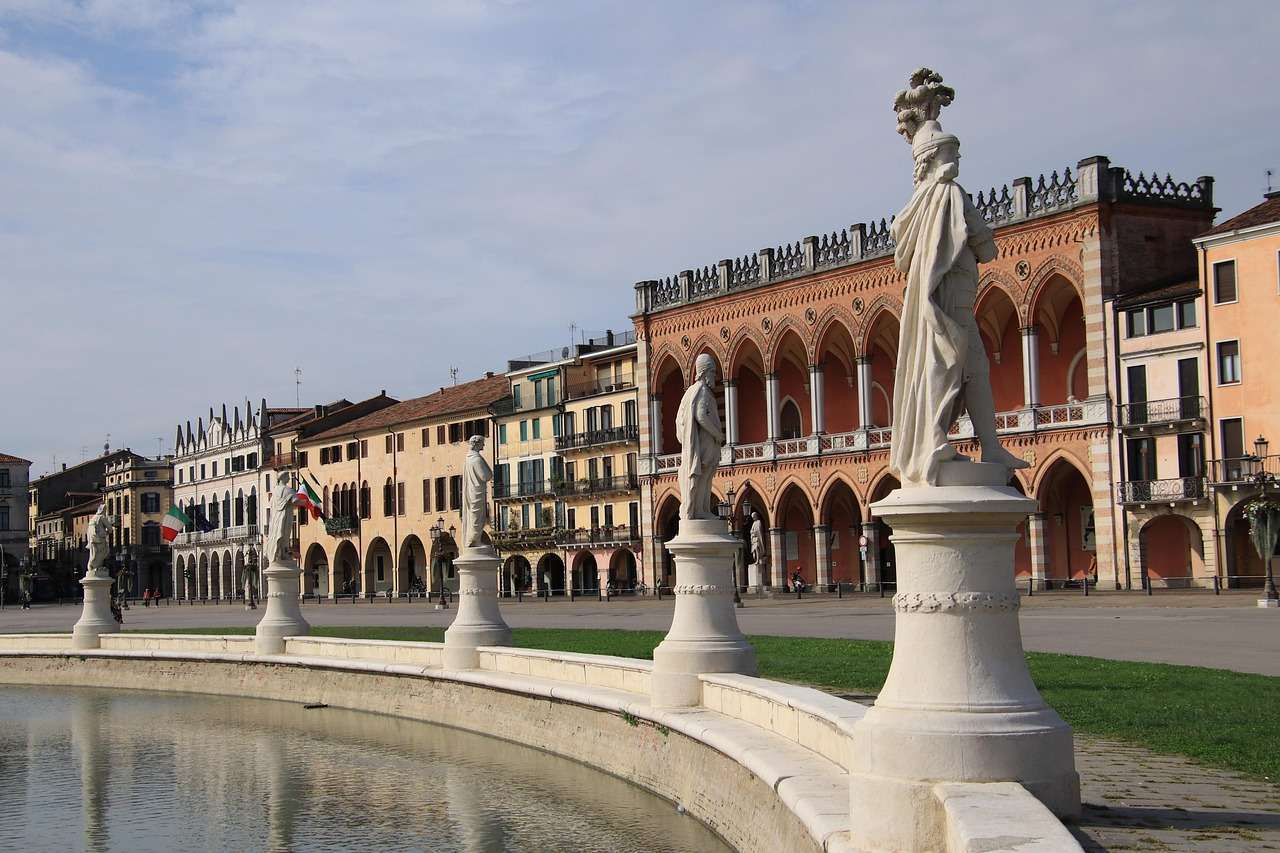
- Prato della Valle is one of Europe’s largest squares and easily its most eccentric: an elliptical canal-ringed island guarded by 78 statues.
- The market squares flanking the Palazzo della Ragione — fruit on one side, herbs on the other, salumi under the arcades — are working Padua at its best; the spritz in its homeland costs local prices.
Getting there
Padua sits on Venice’s main line west, which means trains without end: fast services in 26 minutes, regionals in 50 for a handful of euros. No planning is needed beyond matching your arrival to the Scrovegni slot booked days before. From the station, the chapel and its Roman-arena garden are ten minutes on foot; the rest of the center unrolls southward under kilometer after kilometer of arcade — Padua is a city built for walking in any weather.
The day
The chapel first, at your hour: the airlock’s wait doubles as an introduction film, and then fifteen minutes under the Last Judgment and the Kiss of Judas — brief by design and long in the memory. The adjoining Eremitani museum absorbs the next hour without effort. Walk south through the market squares for lunch among the stall-holders, tour the Bo’s anatomical theatre mid-afternoon, and give il Santo the late slot pilgrims prefer. End on Prato della Valle as the statues go gold, with a spritz where the drink was standardized before the train home. Padua compresses well; it is better uncompressed.
When to go
Padua is a year-round city — arcades defeat rain, and the chapel’s climate is engineered regardless of yours. October to April runs quietest with same-week Scrovegni slots common; June 13, the feast of St. Anthony, floods the basilica quarter with pilgrims and processions, worth either joining or noting. Summer brings Veneto heat softened by all that shade. The one constant is the chapel booking: earlier equals calmer, always.
Frequently Asked Questions
Is fifteen minutes in the chapel enough?
It is what conservation allows, and it concentrates the mind wonderfully. Read the cycle’s layout beforehand and the quarter hour spends like an hour; double-slot evening tickets appear in some seasons for the devoted.
Padua or Verona from Venice?
Padua for art and university life at half the tourist density; Verona for the arena and the balcony economy. Padua is the better secret; it is not close.
Do I need the basilica dress code?
Shoulders and knees covered — il Santo is a working pilgrimage church and enforces it kindly. The Donatello altar repays the compliance.
Is the anatomical theatre tour worth booking?
For anyone with a scientific bone, yes — the Bo tour’s theatre and Galileo material are singular. English slots are limited; check times when you book the chapel.
What is Padua’s food move?
The market squares for lunch — bigoli, horse-meat tradition for the willing, salumi under the Ragione arcades — and an Aperol or select spritz at Prato della Valle prices, which is to say fair ones.