Chioggia, Venice’s Working Cousin
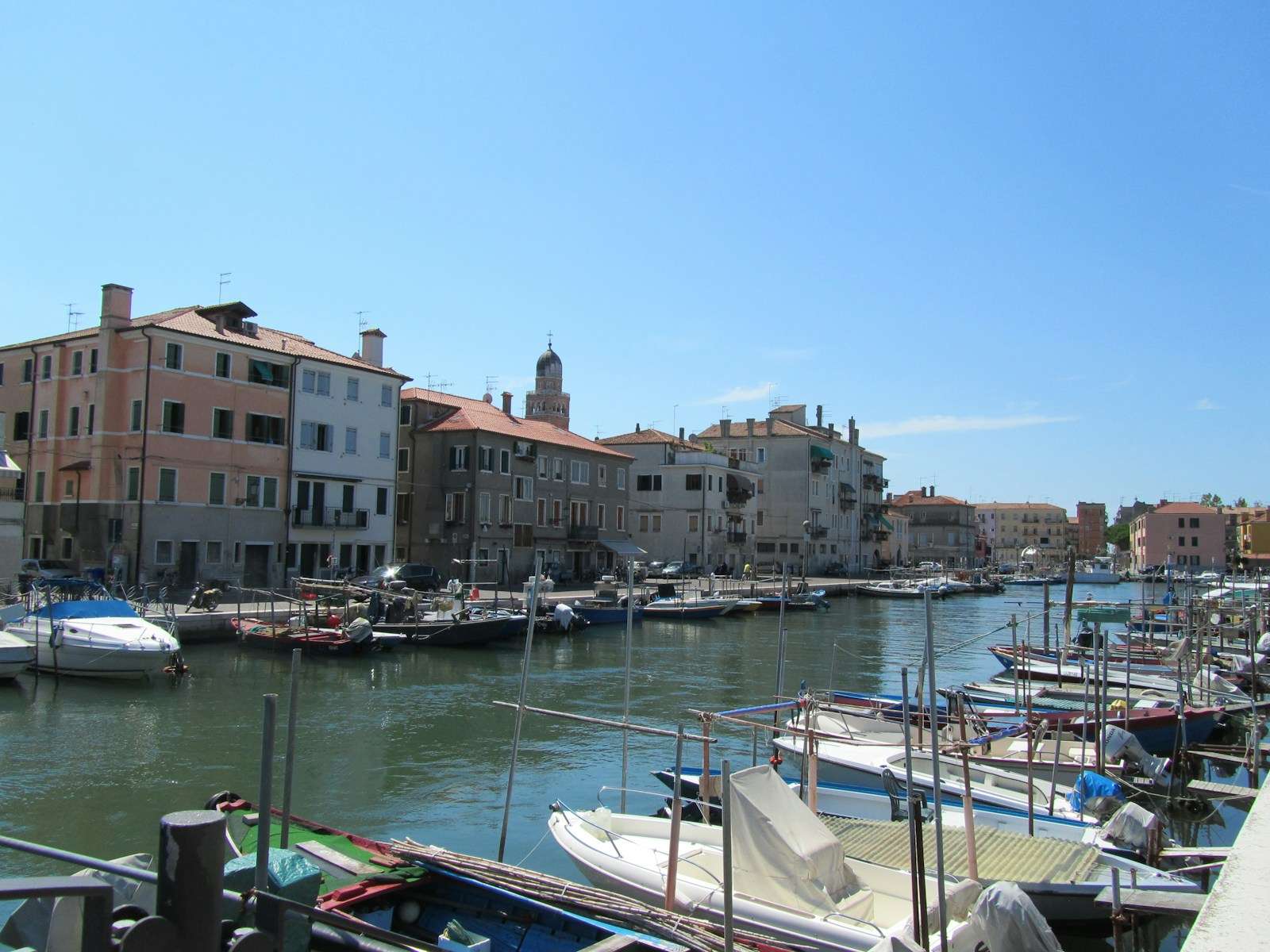
At the lagoon’s southern gate, Venice’s working cousin — canals, bridges, and leaning towers, minus the crowds, plus one of Italy’s biggest fishing fleets. The slow way there is the trip.
The short version
- The slow way per the alarm is the designed route: vaporetto to the Lido, bus 11 down the sandbar (it boards the Pellestrina ferry mid-route, bus and all), and the connecting boat into Chioggia — about two hours of lagoon-edge travel on ordinary transit tickets (actv.it), with the direct bus from Piazzale Roma running the 50-minute prose version.
- The working-cousin frame is the town’s substance: Chioggia runs one of Italy’s largest fishing fleets from its canal-side quays — trawlers, nets, and ice trucks conducting the economy Venice retired from — with the architecture (canals, bridges, campanili with authentic leans) reading as Venice at working density.
- The fish market per the alarm is the morning theater: the retail hall and quayside trade run Tuesday through Sunday from dawn — sole, cuttlefish, canocchie, and the lagoon’s whole register sold at volume — watched per the alarm rather than shopped by day-trippers.
- The Corso del Popolo is the spine: the wide café-lined main street running parallel to the Canal Vena’s bridges and boats, with the town’s churches (San Domenico’s Carpaccio the connoisseur stop) strung along it.
- The Goldoni credential per the alarm: Carlo Goldoni set his beloved comedy of squabbling Chioggia fisherfolk here — Le baruffe chiozzotte — and the town’s volume, dialect, and unbothered continuity per the alarm remain recognizably the play’s.
- The eating register closes it: what the fleet landed — fritto misto, seppie in nero, the radicchio di Chioggia the town also farms — priced for the trucks’ customers rather than the gondolas’, with Pellestrina’s mussel shacks as the slow-route bonus stop.
Getting there
The route decision per the alarm is the itinerary: the slow way down the Lido and Pellestrina turns transit into the day’s first attraction — beach-village Venice, the Murazzi sea walls, the bus rolling onto the ferry — while the direct bus serves the schedule-pressed. The classic shape runs slow way out, direct bus back (or reversed for market timing: mornings per the alarm, never Mondays). Everything in town walks flat; the transit tickets cover every leg including the amphibious one.
The day
Arriving by water lands you at the market end while the trade still runs: crates sliding, dialect flying, the retail hall’s counters iced and loud — watched at the alarm’s buy-nothing register with coffee in hand. The Corso absorbs the late morning: café fronts, the Canal Vena’s bridge-by-bridge boat traffic, laundry and leaning towers doing Venice’s postcard work without Venice’s crowd. San Domenico’s Carpaccio and the granary fill the culture slot at exactly Chioggia’s scale. Lunch is the fleet’s verdict — fritto, seppie, the radicchio in season — taken long. The afternoon walks Sottomarina’s beach across the bridge for the lido contrast, or simply re-runs the canals at digestive pace before the amphibious route home per the alarm, Pellestrina’s mussel shacks auditioning for a stop the schedule may not survive.
When to go
Year-round honestly — the fleet, market, and canals are all-weather, with the market’s Tuesday-through-Sunday mornings as the fixed rhythm per the alarm. Summer adds Sottomarina’s beach economy and evening passeggiata voltage; winter wraps the canals in fog that photographs like Goldoni’s era. The Sagra del Pesce (July) turns the town into one fried-fish table for a week. Venice’s own crush calendar barely registers here, which is the whole point.
Frequently Asked Questions
Is it really like Venice?
Structurally yes, socially no: canals, bridges, campi, and campanili on a herringbone plan — but inhabited by a working town that fishes, shops, and argues at full volume rather than performing itself. The comparison per the alarm undersells what Chioggia actually offers: not a smaller Venice but the control group — Venice had it kept its job.
How does the bus board a ferry?
Route 11’s designed party trick: the bus drives down the Lido, rolls onto the Pellestrina ferry with passengers seated, crosses, and continues down the next island to the Chioggia boat connection. It’s ordinary commuting for locals and quietly delightful for everyone else — the lagoon’s geography solved with a timetable.
What should I actually eat?
The fleet’s morning list: fritto misto of the small stuff, seppie in nero with polenta, canocchie when cold months bring them, grilled sole, and the town’s own radicchio rosso di Chioggia in season. Quayside trattorie price for regulars. Pellestrina’s mussels (le peocere) justify the slow route’s stop when hours allow.
Who was Goldoni here?
Venice’s great comic playwright worked in Chioggia as a young legal official, and his Le baruffe chiozzotte — the fisherfolk squabble comedy Goethe admired in performance — bottled the town’s voice permanently. Chioggia returns the favor per the alarm by continuing to sound exactly like the script, which locals regard as the play’s documentary accuracy.
Chioggia or Murano and Burano from Venice?
Both documented on this network: Murano-Burano for glass, color, and the classic lagoon circuit inside the day-pass math; Chioggia for the working south and the amphibious route. Craft islands versus fishing city — the honest Venice week does both directions, and Chioggia is the one where you’ll hear no language but Italian.